The Fragile Earth

The Fragile Earth

David Remnick

David Remnick

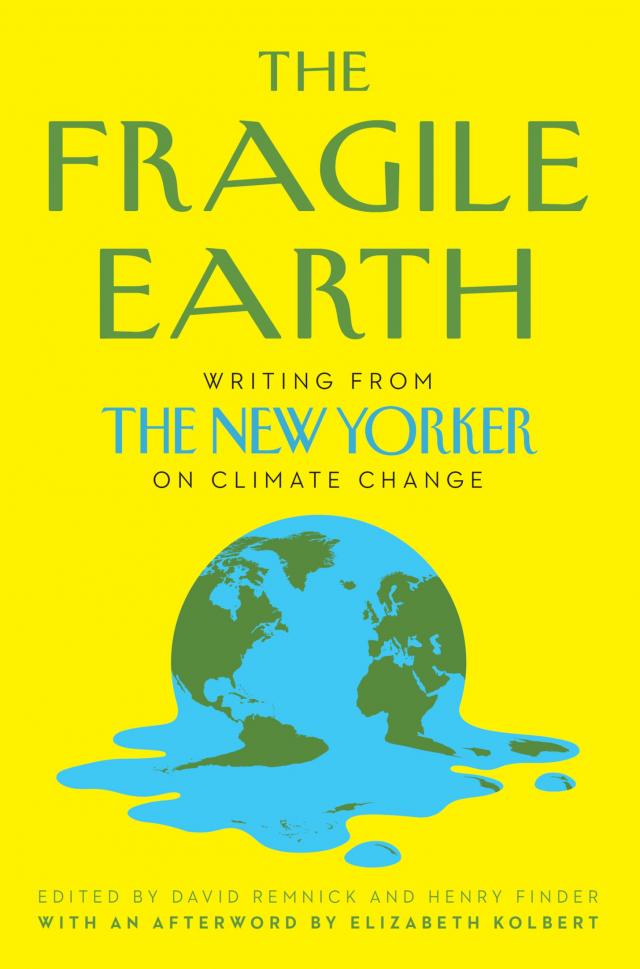
A collection of the New Yorker's groundbreaking reporting from the front lines of climate change—including writing from Bill McKibben, Elizabeth Kolbert, Ian Frazier, Kathryn Schulz, and moreJust one year after climatologist James Hansen first came before a Senate committee and testified that the Earth was now warmer than it had ever been in recorded history, thanks to humankind's heedless consumption of fossil fuels, New Yorker writer Bill McKibben published a deeply reported and considered piece on climate change and what it could mean for the planet. At the time, the piece was to some speculative to the point of alarmist; read now, McKibben's work is heroically prescient. Since then, the New Yorker has devoted enormous attention to climate change, describing the causes of the crisis, the political and ecological conditions we now find ourselves in, and the scenarios and solutions we face. The Fragile Earth tells the story of...
Read online
  • 273
King of the World

King of the World

David Remnick

David Remnick

There were mythic sports figures before him--Jack Johnson, Babe Ruth, Joe Louis, Joe DiMaggio--but when Cassius Clay burst onto the sports scene from his native Louisville in the 1950s, he broke the mold. He changed the world of sports and went on to change the world itself. As Muhammad Ali, he would become the most recognized face on the planet. Ali was a transcendent athlete and entertainer, a heavyweight Fred Astaire, a rapper before rap was born. He was a mirror of his era, a dynamic figure in the racial and cultural battles of his time. This unforgettable story of his rise and self-creation, told by a Pulitzer Prize-winning writer, places Ali in a heritage of great American originals. Cassius Clay grew up in the Jim Crow South and came of athletic age when boxers were at the mercy of the mob. From the start, Clay rebelled against everything and everyone who would keep him and his people down. He refused the old stereotypes and refused the glad hand of the...
Read online
  • 68
The Only Game in Town

The Only Game in Town

David Remnick

David Remnick

For more than eighty years, The New Yorker has been home to some of the toughest, wisest, funniest, and most moving sportswriting around. The Only Game in Town is a classic collection from a magazine with a deep bench, including such authors as Roger Angell, John Updike, Don DeLillo, and John McPhee. Hall of Famer Ring Lardner is here, bemoaning the lowering of standards for baseball achievement--in 1930. John Cheever pens a story about a boy's troubled relationship with his father and the national pastime. From Lance Armstrong to bullfighter Sidney Franklin, from the Chinese Olympics to the U.S. Open, the greatest plays and players, past and present, are all covered in The Only Game in Town. At The New Yorker, it's not whether you win or lose--it's how you write about the game.
Read online
  • 59
Disquiet, Please!

Disquiet, Please!

David Remnick

David Remnick

The New Yorker is, of course, a bastion of superb essays, influential investigative journalism, and insightful arts criticism. But for eighty years, it's also been a hoot. In fact, when Harold Ross founded the legendary magazine in 1925, he called it "a comic weekly," and while it has grown into much more, it has also remained true to its original mission. Now an uproarious sampling of its funny writings can be found in a hilarious new collection, one as satirical and witty, misanthropic and menacing, as the first, Fierce Pajamas. From the 1920s onward--but with a special focus on the latest generation--here are the humorists who set the pace and stirred the pot, pulled the leg and pinched the behind of America. S. J. Perelman unearths the furious letters of a foreign correspondent in India to the laundry he insists on using in Paris ("Who charges six francs to wash a cummerbund?!"). Woody Allen recalls the "Whore of Mensa," who excites her...
Read online
  • 52
Lenin's Tomb

Lenin's Tomb

David Remnick

David Remnick

In the tradition of John Reed's classic Ten Days That Shook the World, this bestselling account of the collapse of the Soviet Union combines the global vision of the best historical scholarship with the immediacy of eyewitness journalism. "A moving illumination . . . Remnick is the witness for us all." --Wall Street Journal.
Read online
  • 28
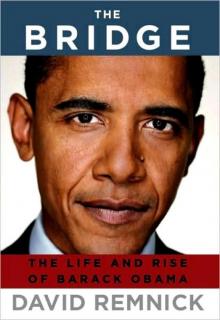
The Bridge: The Life and Rise of Barack Obama

The Bridge: The Life and Rise of Barack Obama

David Remnick

David Remnick

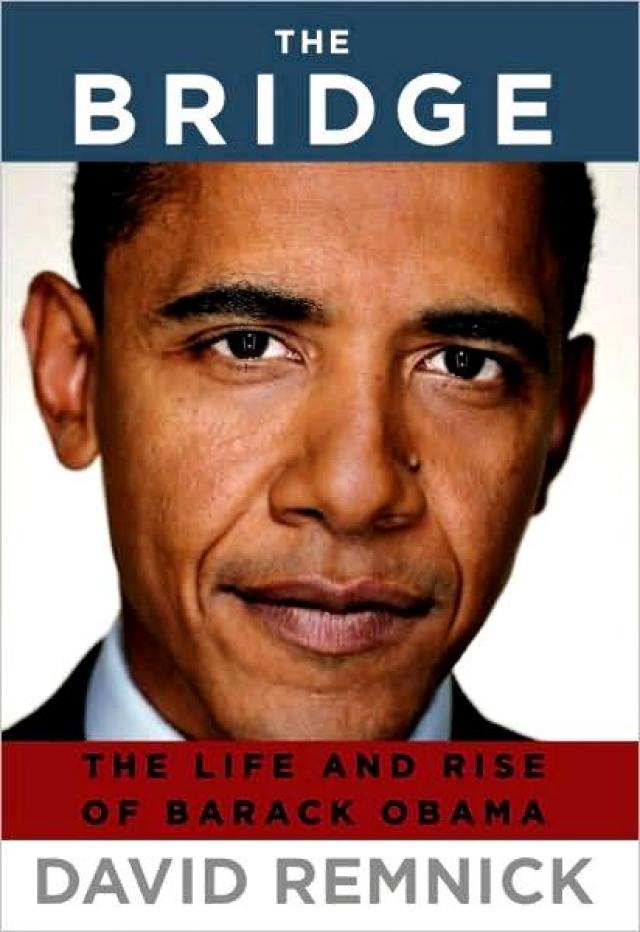
EDITORIAL REVIEW: No story has been more central to America’s history this century than the rise of Barack Obama, and until now, no journalist or historian has written a book that** **fully investigates the circumstances and experiences of Obama’s life or explores the ambition behind his rise.** **Those familiar with Obama’s own best-selling memoir** **or his campaign speeches know the touchstones and details that he chooses to emphasize, but now—from a writer whose gift for illuminating the historical significance** **of unfolding events is without peer—we have a portrait, at once masterly and fresh,** **nuanced and unexpected, of a young man in search of himself,** **and of a rising politician determined to become the first African-American president.*The Bridge* offers the most complete account yet of** **Obama’s tragic father, a brilliant economist who abandoned** **his family and ended his life as a beaten man;** **of his mother, Stanley Ann Dunham,** **who had a child as a teenager and then built her career as an anthropologist living and studying in Indonesia;** **and of the succession of elite institutions that first exposed Obama** **to the social tensions and intellectual currents** **that would force him to imagine and fashion an identity for himself. Through extensive on-the-record interviews with friends and teachers, mentors and disparagers, family members and Obama himself,** **David Remnick allows us to see how a rootless, unaccomplished, and confused young man** **created himself first as a community organizer in Chicago, an** **experience that would not only shape his urge to work in politics but give him a home and a community, and that would propel him to Harvard Law School, where his sense of a greater mission emerged.Deftly setting Obama’s political career against the galvanizing intersection of race and politics in Chicago’s history, Remnick shows us how that city’s complex racial legacy would make Obama’s forays into politics a source of controversy and bare-knuckle tactics: his clashes with older black politicians in the Illinois State Senate, his disastrous decision to challenge the former Black Panther Bobby Rush for Congress in 2000, the sex scandals that would decimate his more experienced opponents in the 2004 Senate race, and the story—from both sides—of his confrontation with his former pastor, Jeremiah Wright.** **By looking at Obama’s political rise through the prism of our racial history, Remnick gives us the conflicting agendas of black politicians: the dilemmas of men like Jesse Jackson, John Lewis, and Joseph Lowery,** **heroes of the civil rights movement, who are forced to reassess old loyalties and understand the priorities of a new generation of African-American leaders.*The Bridge* revisits the American drama of race, from slavery to civil rights, and makes clear how Obama’s quest is not just his own but is emblematic of a nation where destiny is defined by individuals keen to imagine a future that is different from the reality of their current lives.
Read online
  • 14
183