

Cells, p.1
Cells, page 1


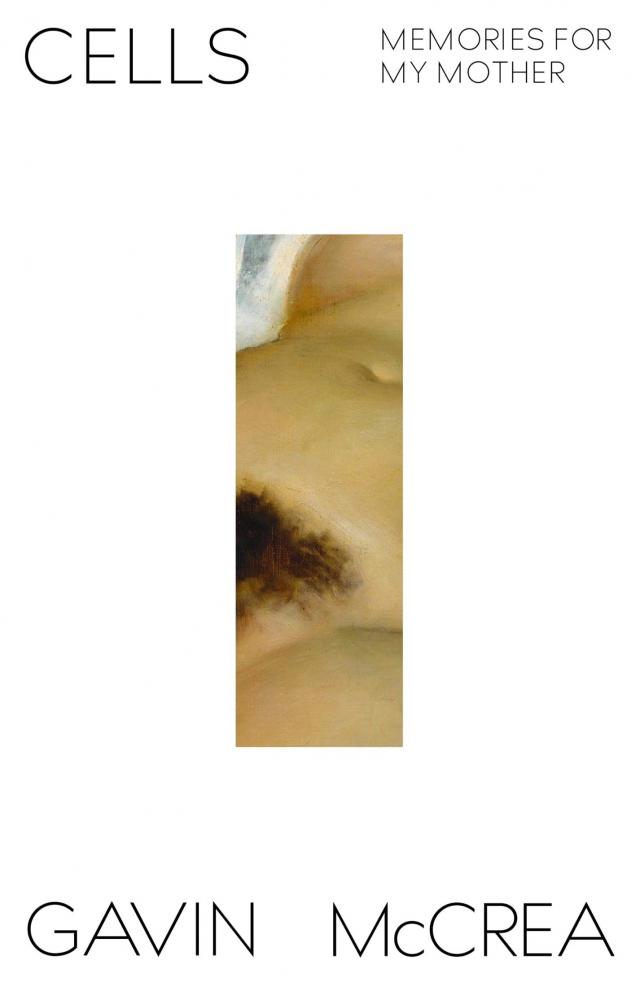
CELLS
Gavin McCrea is the author of two critically acclaimed novels, Mrs Engels (2015) and The Sisters Mao (2021), both published by Scribe. His articles have appeared in The Paris Review, The Guardian, The Irish Times, Catapult, and LitHub.
Scribe Publications
18–20 Edward St, Brunswick, Victoria 3056, Australia
2 John St, Clerkenwell, London, WC1N 2ES, United Kingdom
3754 Pleasant Ave, Suite 100, Minneapolis, Minnesota 55409, USA
Published by Scribe 2022
Copyright © Gavin McCrea 2022
All rights reserved. Without limiting the rights under copyright reserved above, no part of this publication may be reproduced, stored in or introduced into a retrieval system, or transmitted, in any form or by any means (electronic, mechanical, photocopying, recording or otherwise) without the prior written permission of the publishers of this book.
The moral rights of the author have been asserted.
Excerpt from Louise Bourgeois, 29 September 1955. Loose sheet of writing (LB-0126); © The Easton Foundation/LVAGA at Artists Rights Society (ARS), New York.
Every effort has been made to acknowledge and contact the copyright holders for permission to reproduce material contained in this book. Any copyright holders who have been inadvertently omitted from the acknowledgements and credits should contact the publisher so that omissions may be rectified in subsequent editions.
Scribe acknowledges Australia’s First Nations peoples as the traditional owners and custodians of this country, and we pay our respects to their elders, past and present.
978 1 922585 09 7 (Australian edition)
978 1 914484 04 9 (UK edition)
978 1 95736 3 4 9 (US edition)
978 1 922586 60 5 (ebook)
Catalogue records for this book are available from the National Library of Australia and the British Library.
scribepublications.com.au
scribepublications.co.uk
scribepublications.com
This book is for my mother, Breda
CONTENTS
PROLOGUE: DUBLIN, 2020
CELL I
INTERLUDE: COUNTY MAYO, 1989
CELL II
INTERLUDE: ÎLE D’OLÉRON, 1993
CELL III
INTERLUDE: ROME, 2004
CELL IV
INTERLUDE: PARIS, 2013
CELL V
INTERLUDE: HORTA DE SANT JOAN, 2013
CELL VI
INTERLUDE: LONDON, 2015
CELL VII
EPILOGUE: MADRID, 20—
Author’s Note
Acknowledgements
PROLOGUE: DUBLIN, 2020
I am spending the quarantine in a small flat in south Dublin with my eighty-year-old mother, who, according to the emergency regulations, is not allowed outside at any time or for any reason, but who at ten o’clock every morning, having breakfasted and hoovered and watered the flowerpots and decided she can’t spend another moment within these walls, insists on packing her coin purse and a bottle of water into her backpack—she leaves her mobile phone on the kitchen counter—and setting off on a route that takes her along the Dodder River, through Rathgar, then Milltown, then Clonskeagh, into Donnybrook, where, in the only place open, a SPAR supermarket, she buys a takeaway coffee and a pastry to be eaten as she makes her way through Herbert Park, Ballsbridge, Ringsend, reaching the River Liffey at Tom Clarke Bridge, in normal circumstances a busy toll link but now empty of traffic, which allows her to stand in the middle of the road as she looks across to the port on the other bank, and the moored boats, and the warehouses, and the cranes that seem to be holding up by thin threads the skeletons of new office blocks, and I wonder what comes to her mind then, at that spot, taking in this scene, which even devoid of people and cars and in this bright spring weather cannot, I imagine, be beautiful, is there something specific that touches her, the sight of a swallow returned from Africa perhaps, before she turns around and returns the way she came—eight kilometres each way, sixteen in total—and comes back through the door and takes off her shoes, and I say to her from the kitchen where I am preparing our lunch—vegetarian salads or soba noodles or pilaf or roasted vegetables and, twice a week, fresh fish, for both of us are skinny and live in terror of weight gain—‘Did you get arrested?’ and she says, ‘Pardon?’ because she is almost deaf, and I say, ‘Did they slap a fine on you at least?’ and if she hears this, which she sometimes chooses to, she lets out a laugh before going into her bedroom to get changed into her indoor jumper and slacks, and, because she doesn’t emerge for a while, I call in to her, ‘This is ready, come in and sit down,’ but she can never sit down immediately, she has to do something first, like put a wash into the machine, so I am always at the table before her, waiting, already irritated, and when finally she does come, she says, ‘This is gorgeous,’ before she has even tasted the food, and then, ‘Are you going into town today?’ which annoys me further because it is something she says all the time, having forgotten she said it before, and I say, ‘Jesus, Mum, not this again,’ and she says, ‘What again?’ and I say, ‘Why would I be going into town? Town is shut down,’ and while she can see I am upset and wants not to upset me like this, she is also wounded by my tone, and I am ashamed then and can only look at my plate, and I decide not to bring up what I intended to bring up, about the past, and about my need for her to apologise for it.
CELL I
Entrance is by a glass-fronted door on the east side of the building. Going through, I am in a vestibule about twice the size of an old telephone box. It is cold here, even on a warm day. Lights flash on an alarm box mounted on the wall, announcing its readiness for use. My mother is against alarms, the idea as much as the noise, and I would switch it off permanently to save the energy, but the required code has long been forgotten. Turning around to close the door behind me, my rucksack of groceries ruffles the leaves of a plant that sits on a low table. Placed in that particular spot, the plant does not get knocked over by the opening door or broken by things coming through the letter box, but it does obstruct access to the narrow flight of stairs, forcing me to mount the first step diagonally rather than straight-on.
There are fifteen steps up, covered in an old carpet of beige, mauve, burgundy, and blue stripes. When my mother bought this flat a decade ago, she was adamant that a stairlift be immediately installed in case she suddenly lost her mobility. She was coming from a semi-detached suburban house—with a big sitting room downstairs into which a bed could be put, if it ever came to that—and she wanted to be prepared. She had lived the first years of her life in a single room at the top of a house in the city centre, so she knew what it was like: the breath that was expended ascending and descending, the lugging up of water pails, the dragging down of ash. She also knew that people sometimes gave up and took to staying in, requiring others to do the up-and-down for them. She was frightened of that end for herself. The loss of independence. The shame of having to rely on others.
Really rather irrational, we thought.
‘Not quite at the stairlift stage, Mum. We’ll hold off on that.’
The legs, we were right to believe, would be the last thing to go.
Coming up the stairs, there is about a handspan of distance on either side between my shoulders and the walls. For two people to cross each other here, they would have to put their backs against the wall, and even then their torsos, their busts would rub against each other.
Que leurs torses, leurs bustes se frottent!
(A little command from my ego. A director in search of a cast.)
Through a second door and I am in the main living space. (I am arriving alone, in case there was any ambiguity.) A single room with an open kitchen, a dining table, and a seating area. A large window in the opposite wall, facing west. A smaller window in the kitchen. A glass door giving on to a tiny balcony. Bright enough, overall, not to require lights until late in the evening. And quiet. No flat overhead, and the one downstairs has been empty for some time. No car engines or horns because the main road is at a distance. No television set. No music player. There is a flashy internet radio—the internet itself I had installed only a couple of weeks ago—but it is only rarely turned on these days because, unless she sits right beside it and turns the volume right up, she can no longer make out the voices. For a while she missed them. Then she stopped mentioning them.
To the right, running along the north wall, are her bookshelves. Her collection was thinned out during the move from the family home, but what remains is by any standard impressive; that it belongs to a woman with only a bare-bones primary education, I think is extraordinary. The Irish, of course. But also the Russians. The French. The English. The Americans. A special section dedicated to Richard Ford, with whom she is in a sort of psychogenic relationship. She buys his books in hardback as soon as they come out, and cuts out his interviews, and talks about his professed devotion to his wife as something marvellous, if a bit weird. She met him once at a book signing in Dublin. While waiting for him to finish writing on her copy of Lay of the Land, she took a good look at his shoes.
‘My goodness. They’re exactly the sort I imagine Frank Bascombe to wear.’
Over which they shared a good old laugh.
Of all Ford’s works, she holds a particular fondness for his memoir of his parents, Between Them. Ford’s father had been a travelling salesman, a bit like my own father, and Ford’s mother had been educated by nuns and then taken out of school without explanation, a bit like her.
‘Just ordinary people. No great earthquakes.’
She finished the book, cried, then opened it at the beginning and went again.
Ford says of his relationship with his mother: ‘We could always say “I love you” to clarify our complicated dealings without pausing. That seems perfect to me now and did then.’
It seems perfect to me, too. I admire it, as I think my mother does, though she would not tolerate much of it in reality. Sometimes, in our moments of intimacy, I do manage an I-love-you, but she does not return it. She is proficient in the other gestures. It is the words that are hard for her.
‘I’m a doer, not a sayer.’
When I point out to her that that is a false division, that in fact saying is a form of doing, she looks put out. She enjoys hearing things that she herself could not say, reading things she could not write. She likes articulate people. But that does not mean she wants them in her kitchen, coming at her.
On the floor, just beyond the threshold, is a folded newspaper on which my hiking boots and her walking sandals are placed side by side. There being space for these two pairs only, I keep my runners on as I head for the big window opposite, which is closed and needs to be opened unless the heating is on, and sometimes even then: the place must be kept aired. After six steps, I am in the seating area, which consists of three ill-matching bits of furniture. One: a moss-green two-seater couch, too uncomfortable to settle into, but fine for perching on to get access to my mother’s good ear. Two: a massive, and I mean massive, coffee table—the weight, I would wager, of one of those new Cinquecentos I see parked everywhere outside—on whose lower shelf she keeps her theatre and concert programmes, her art books, her poetry collections, her saved articles, her things to dip into. Three: an armchair in cream faux leather, pre-ergonomic. This is where my mother reads her novels and does her crosswords. Right now, it is empty, because she is out for her walk. Morning is for exercising, and the hour after lunch is for washing up and drying and organising, but after that, in the late afternoon and evening, her rest earned, she permits herself to sit, and this is her place. A nice part of the day, that. Both of us exercised and fed. Me in my room working. She in her chair reading and scribbling. The place hushed. Peaceful. My favourite time. My most productive. Unless:
‘Do you know what terpsichorean means?’
‘No.’
‘No? And you a doctor of literature.’
A couple of more steps gets me to the window, which is framed by a pair of curtains decorated with horizontal bands of gold and coral. Outside on the grass, two heterosexual families, safely detached, are having picnics. Nearby, a pair of infants, girls, are playing house in a branded and highly gendered tent: pink, princess, turrets, bleugh. I open the window, which lets the voices in, though I am careful not to listen to the message they are carrying. The dwellings in this development are completely ordinary: what, situated in any other part of the city, any other part of Europe, would be working-class homes. Squat, uninspired blocks of red brick. Two and three storeys. Two-bed units, mostly. But the area, the so-called postcode—recently replaced by a more complex Eircode but persisting as a single digit in the national consciousness—has the highest property prices in the country. I am ashamed even to know this. It disgusts me that people get to live here, as I do, on these roads, by this river, with these shops, and town right there. My only reassurance is the certainty that the conversations happening around me are abysmal.
Headline: The Perfect Pandemic Escape in Wicklow for €550,000.
Possibly the picnickers are talking about that. As I am talking about it now. The perfect escape: is that not death? In the meantime, there is no getting way from ourselves. I look down at my neighbours on their blankets, picking from plastic tubs of olives, and it is painful because they could just as well be me.
Moving from the window towards the kitchen, I pass the dining table, another colossal structure. A rectangle long enough for six high-backed chairs in brown-and-beige faux leather. The surface divided into two parts. On one end, two place mats (more beige faux leather) that mark our mealtime positions: mine on the inside facing out, hers on the outside facing in. On the other end, her easel, along with a box of watercolour paints and some mixing trays, all now unused. She used to paint all the time. Well, a couple of times a week in the summer, anyway. At the dining table in the old family home. In the afternoon, after lunch, accompanied by a vinyl of classical music. Jars of water brought in from the kitchen tap. To begin with, her brushes glancing the surface of the water, just to moisten the bristles; then plunging deep and swirling around, turning everything brown. ‘Change that water for me, can you, love?’ The careful squeezing of tubes so as not to release too much paint. The scratch of her blade over a line of masking fluid. And her cry of distress—‘Ah!’—when she made a mistake, one wash too many, requiring a rush to the sink, where the paper was put under running water. Her palette: French ultramarine, cadmium red, indigo, carmine, cerulean, rose, terracotta. Her style, impressionistic. The mood dreamy. A still life of pears whose blue shadows bleed back onto the skin. A cellist with no features on her face. A woman in a chair, her back to the viewer, her hair in a bun. An ancient statue, blue amongst blocks of sandy stone. A copse of bare trunks, a grey-blue sky, rays of purple and yellow light breaking through, and splashes of pink and red all over (achieved by running her thumb along a toothbrush soaked with colour): my favourite. The walls of the flat are decorated with these paintings. Framed in bleached wood. In the bottom right-hand corner of each, her signature painted on a diagonal. The images, which had always been hazy, now faded by time. She will not take up painting again. But nor will she take the easel and the tubes of colour off the dining table. They will stay there as artefacts on display. Objects of historical interest.
In the kitchen, I put my rucksack down on the cream tiled floor and begin to put the shopping away. Vegetables into the dark utility room. Fruit into the bowls on the counter. Pulses and legumes and rice and couscous into the cupboard beside the cooker. But there is no guarantee these items will stay in those places. When my mother comes home, chances are she will make changes. Like, wash the fruit again and put them in different bowls on the table. Or transfer the vegetables to the icebox in the fridge. Or rearrange the cupboard, swapping the pasta and the muesli around. As far as I can tell, she does not have fixed ideas about where specific objects ought to be. Rather, the moving around of things, the placing and the replacing, evokes in her the pleasurable sensation of establishing a new order. Her order.
‘Mum, where’s the aubergine I bought? Are you hiding things from me again?’
Perhaps her most unusual habit is that of putting the kitchen utensils, especially the grater and the colander, onto the radiator or the windowsill to dry. Which is to say, after she has dried them with a tea-towel, she puts them out in the sun, or gives a blast of heat, to finish them off. There is a simple point to this, which rationally I am able to fathom: she does not want them going rusty. But there are occasions when I am cooking, with a number of fronts open—something frying and something else steaming and the pasta now ready to be drained—and I am standing in the middle of the kitchen with the pot in my hand and cannot find the fucking colander because it is on the other side of the room, lying upside down on the windowsill, basking in the afternoon sunshine, what may as well be oceans away, another continent, and I feel so angry that my mother is withholding from me what I need that I am minded to tip the boiling water and the—as of thirty seconds ago—al dente rigatoni over her head.
Standing now in front of the open cupboard, a tin of puy lentils in my hand, the memory of the colander brings with it an angry aftershock, one of such power that I feel a terrible constriction in my chest, over which I lay my free hand in order to massage it in slow circles, so that it does not rise up to my throat and my temples, where it could stay all day and turn into an argument.
If a memoir were ever written about her, my mother would prefer it to be like Between Them. In other words, she would prefer to be dead before it is written. I do not blame her. But I think she understands, also, that Ford is writing about his parents as a means to reveal something about himself. He is writing himself through them. And I am doing the same. I cannot see another way. I cannot conceive of a self-portrait that is not painted using my mother’s brushes, that is not a reconstruction by me, of me, from the externals of her life: this flat, that easel, a tin of puy lentils, and, above all else, her.






